


You come home after a long day, slide your key into the lock, give it the usual turn, and then it happens: the key snaps. Half of it is in your hand and the other half is jammed inside the lock cylinder. Suddenly, you cannot get in, you cannot lock up, and you are standing in a hallway or on a stoop wondering what to do next.
A broken key stuck in a lock is one of the most common and frustrating situations NYC residents face. Before you grab the nearest pair of tweezers and risk making things worse, here is what you should actually do.
Step 1: Stop and Do Not Force Anything
The natural reaction when a key breaks is to try to turn whatever remains or to push the fragment further in hoping it will engage the lock. Resist that impulse. Forcing the broken piece deeper into the cylinder can push it past the pin stacks and make extraction dramatically harder. It can also damage the internal mechanism, turning a straightforward extraction into a full lock replacement.
If the broken piece is still partially protruding from the keyway, do not wiggle it aggressively. Any movement that pushes the fragment deeper reduces your chances of a clean removal.
Step 2: Try a Gentle DIY Extraction (If the Piece Is Visible)
If you can see the broken end of the key sticking out of the lock, you may be able to remove it yourself with the right approach. Here are a few methods that sometimes work:
- Needle-nose pliers: If enough of the key is protruding, grip the exposed edge firmly and pull straight out with steady, even pressure. Do not twist.
- Jigsaw blade or broken key extractor: Slide a thin, serrated tool along the side of the key fragment inside the keyway. The teeth can hook onto the key's ridges and allow you to pull it out.
- Spray lubricant: A small amount of lock lubricant such as graphite spray can help loosen the fragment. Apply it before attempting extraction to reduce friction inside the cylinder.
If the fragment will not budge after one or two careful attempts, stop. Continuing to work on it with improvised tools increases the risk of damaging the lock pins or pushing the fragment further in.
Step 3: Call a Professional Locksmith
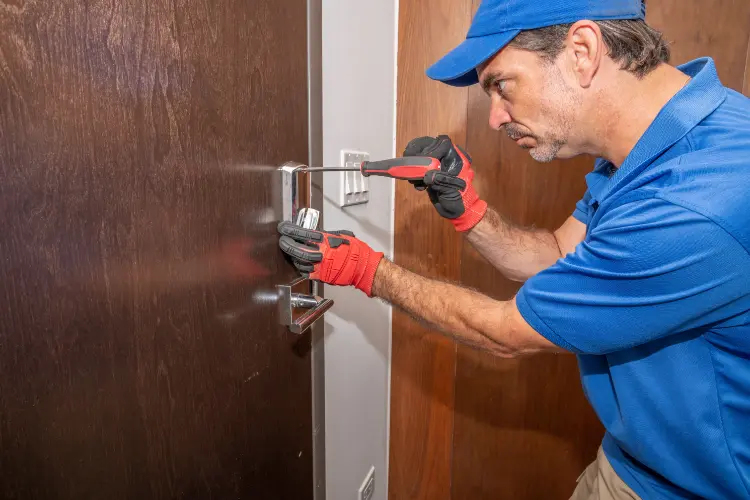
Broken key extraction is one of the most common emergency calls that professional locksmiths handle. A trained technician carries specialized extraction tools designed specifically for this situation and can typically remove the fragment in minutes without causing any damage to the lock.
For NYC residents, calling a licensed locksmith is especially important because many apartment doors use mortise locks or high-security cylinders that require careful handling. Attempting aggressive extraction on these types of locks can void warranties or permanently damage expensive hardware.
Why Keys Break in the First Place
Understanding why keys break helps you prevent it from happening again. The most common causes include:
- Worn or fatigued keys: Keys that have been used daily for years develop microscopic stress fractures, especially at the thinnest points near the cuts. Over time, the metal weakens until it snaps under normal turning force.
- Stiff or poorly maintained locks: When a lock mechanism is dry, corroded, or misaligned, it takes more force to turn the key. That extra torque accelerates metal fatigue and increases the chance of a break.
- Cold weather: Metal becomes more brittle in low temperatures. NYC winters are a prime time for key breaks, especially on exterior doors exposed to freezing conditions.
- Using the key for non-lock tasks: Using your key to pry open packages, scrape ice, or as a makeshift screwdriver weakens the metal and creates stress points that lead to fractures.
- Poor quality key copies: Low-quality duplicates made from soft brass blanks are significantly weaker than original keys. If you use copies frequently, invest in high-quality duplicates from a professional locksmith.
What Happens After the Key Is Extracted
Once the broken fragment is out, your locksmith will test the lock to confirm it still operates smoothly. In most cases, the lock is perfectly fine and you simply need a new key cut. If the extraction required any force or if the lock was already worn, the technician may recommend rekeying or replacing the cylinder as a precaution.
This is also a good time to have your locksmith inspect other locks on the property. If one key broke due to wear, others on the same keyring may be showing similar signs of fatigue.
How to Prevent Broken Keys in the Future
- Replace keys that show visible signs of bending, cracking, or thinning before they snap
- Lubricate your locks every few months with graphite spray to keep the mechanism turning smoothly
- Never force a key that is not turning easily, investigate the cause first
- Get high-quality key duplicates from a professional locksmith rather than self-service kiosks
- Address stiff or sticky locks immediately rather than using extra force as a workaround
Frequently Asked Questions
Can I use super glue to extract a broken key from a lock?
This is not recommended. Super glue can bond to the lock's internal components and make the problem significantly worse. It can permanently damage the cylinder, turning a simple extraction into a full lock replacement.
Will a broken key damage my lock permanently?
Not usually, as long as it is extracted properly. A professional locksmith can remove the broken piece without harming the cylinder in most cases. However, forcing the key fragment deeper or attempting aggressive DIY removal can cause permanent damage.
How much does broken key extraction cost in NYC?
Broken key extraction typically costs between $75 and $200 in New York City, depending on the lock type, time of day, and whether the lock is accessible. Emergency and after-hours calls may be on the higher end.
Should I replace the lock after a key breaks off inside it?
Not necessarily. If the key fragment is cleanly extracted and the lock mechanism is undamaged, the lock can continue to function normally with a new key. Your locksmith will test the lock after extraction and advise you if replacement is needed.
How can I prevent my key from breaking in the lock?
Avoid using excessive force when turning your key, especially in cold weather. Keep your lock lubricated with graphite spray, replace worn or bent keys before they snap, and address any stiffness in the lock mechanism early before it leads to a break.