

What Is an Intercom System?
An intercom system is a two-way communication device that lets a visitor at a building entrance speak with someone inside and, once verified, gain access through an electronically controlled door or gate. In New York City, where doorman-free apartment buildings are common and security is non-negotiable, intercom systems are a foundational piece of building infrastructure, not a luxury.
They vary widely in complexity, from the basic audio-only buzzers found in pre-war walk-ups to modern video intercoms that stream HD footage directly to your smartphone. But at their core, they all do the same thing: control who gets in.
How Does an Intercom System Work?
A standard wired intercom system has four main components working together:
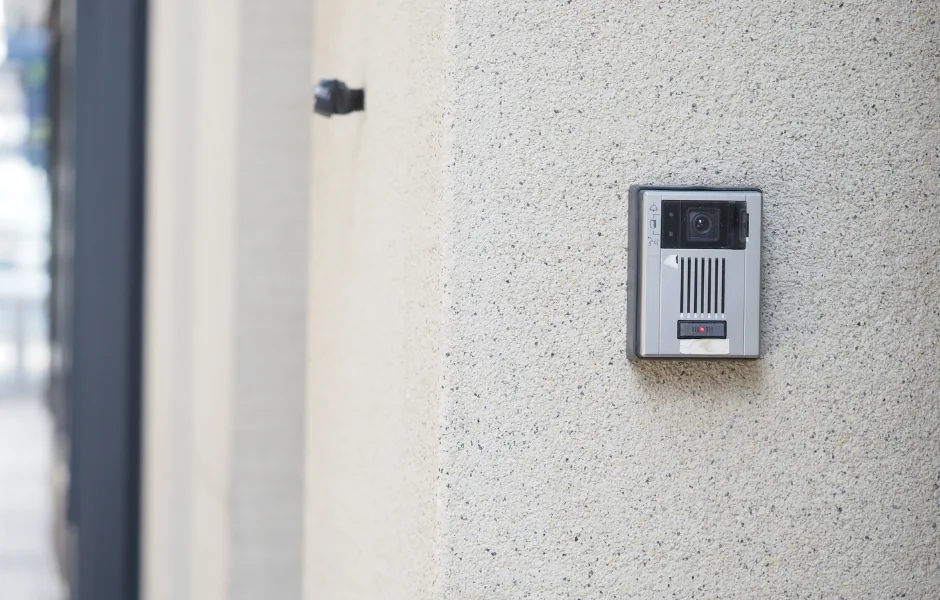
1. The front door panel
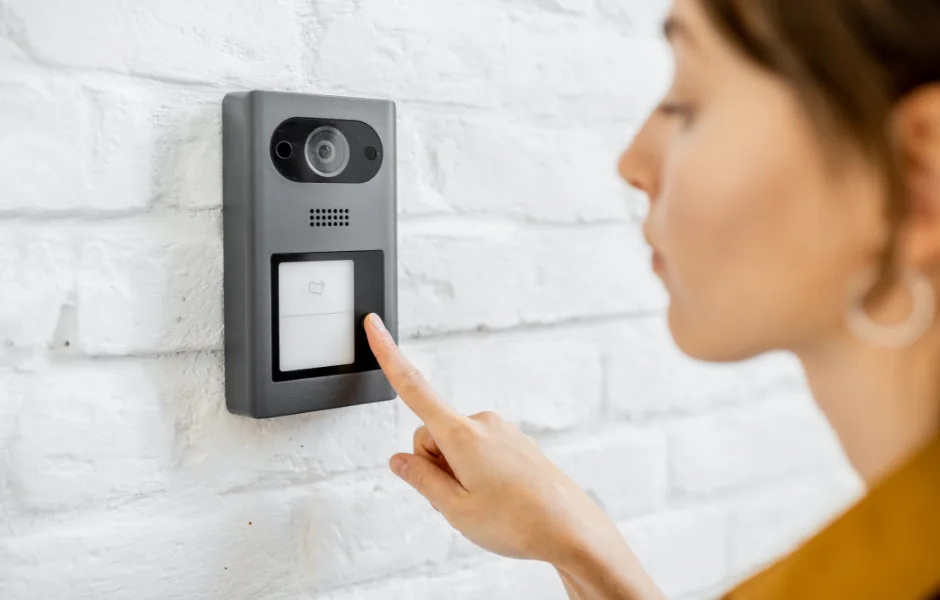
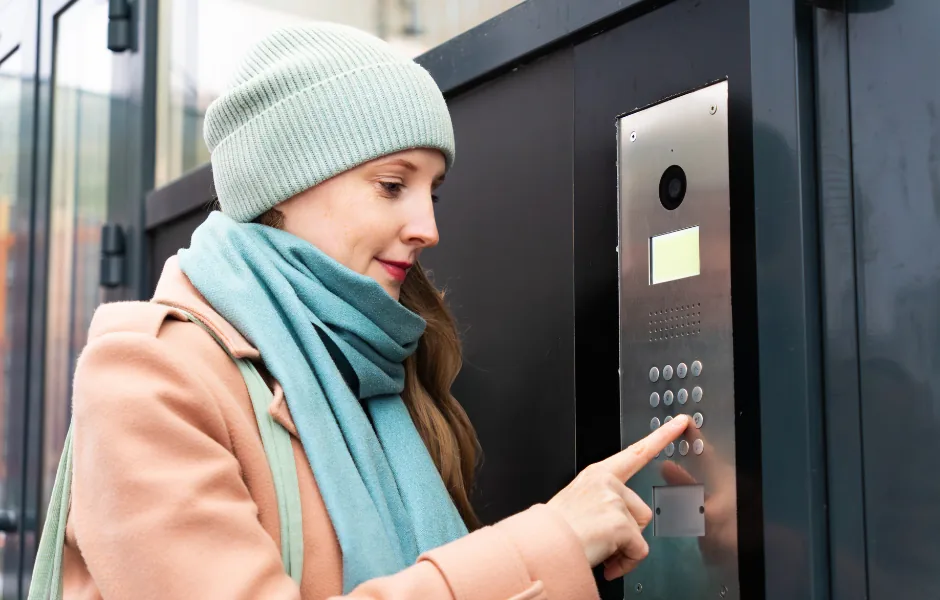
This is the unit mounted at the building entrance, the one visitors interact with. It has a speaker, microphone, call buttons (usually labeled with unit numbers or tenant names), and sometimes a camera. When a visitor presses a button, it sends a signal through the wiring to the corresponding unit inside.
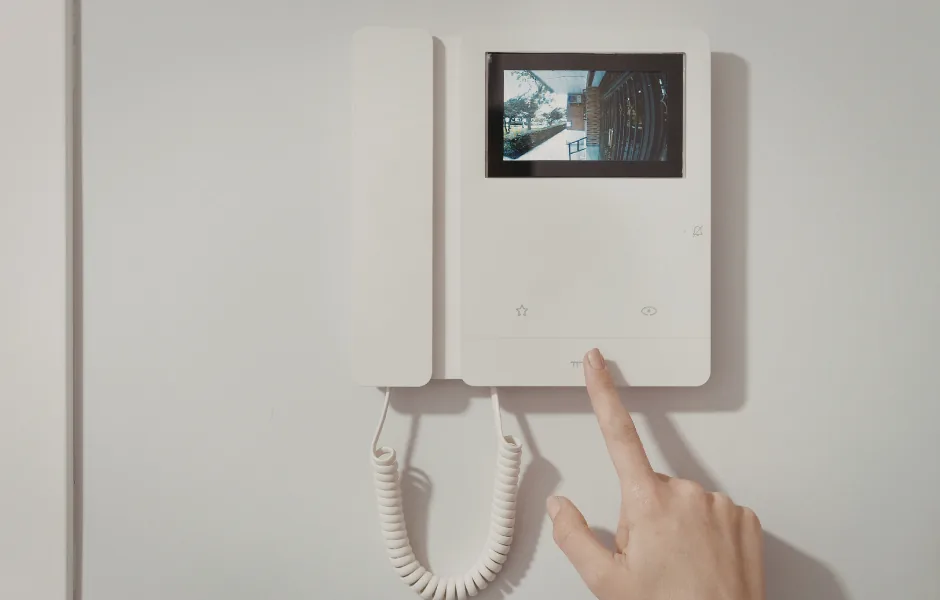
2. The in-unit station
Mounted on the wall near your apartment door, this is what you interact with from inside. When someone presses your button downstairs, your station buzzes or rings. You pick up, speak with your visitor through two-way audio, and if you want to let them in, press a button that sends a signal back down.
3. The control unit (or "brain")
Hidden in a utility room or hallway, this is the central hub that routes signals between the front door panel and all the individual in-unit stations. In older NYC buildings, this is often a small circuit board that connects everything via 4-wire or 5-wire cable.
4. The door release mechanism
When you press the unlock button on your intercom station, the control unit sends a low-voltage signal to an electric door strike or magnetic lock on the front door, releasing it momentarily so your visitor can push it open.
The whole process takes about two seconds. Behind the walls, it's a loop of low-voltage electrical signals traveling through wiring that, in many NYC buildings, was installed 40, 50, or even 80 years ago.
Audio vs. Video Intercoms
Traditional audio-only systems let you hear your visitor but not see them. Video intercoms add a camera at the front panel, sending a live feed to a screen at your in-unit station. Modern systems go further, routing that video to your smartphone via an app, meaning you can see and speak to someone at your front door from anywhere in the city, or anywhere in the world.
Wired vs. Wireless Systems
Most existing NYC apartment buildings run on wired intercom systems, where copper wire physically connects every unit to the front door panel. Wireless systems communicate via Wi-Fi or cellular, eliminating the need for in-wall wiring runs, a significant advantage in older buildings where rewiring is disruptive and expensive.
The tradeoff: wireless systems typically require a stable internet connection to function, while wired systems continue working through internet outages as long as there's power.
Signs Your Intercom System Needs Attention
NYC buildings are full of aging intercom equipment, and the signs of failure are usually obvious before the full breakdown:
- Static or muffled audio, often caused by corroded wiring or a failing transformer
- Door release not firing, visitors are stranded even when you press the unlock button
- Intermittent or dead units, some apartments get calls, others don't
- No video feed, camera has failed or wiring has degraded
- Buzzer bombing, delivery drivers cycling through all units until someone lets them in, which signals the directory or call system is unclear or broken
These issues get worse over time. A system that's throwing static today will often stop working entirely within months.
What To Do With Your Old Intercom System
This is where most property owners and managers get stuck. You know the old system isn't cutting it, but what are your actual options?
Option 1: Repair the existing system
If the wiring is in reasonable condition and the system is a recognized brand, targeted repairs are often possible. A loose wire at the transformer, a dead in-unit station, or a faulty door strike can frequently be fixed without touching the rest of the system. This is the right move if your system is mostly functional and the issue is isolated.
Option 2: Retrofit with a modern front panel
Rather than rewiring the entire building, many NYC properties upgrade just the front door panel to a modern video unit while keeping the existing in-building wiring and in-unit stations. This works when the existing cable (typically 4-wire 22AWG or 18AWG) is in good condition. The upgrade brings video capability and a cleaner interface without the cost of a full replacement.
Option 3: Full system replacement
When wiring is too degraded to support a modern system, or when a building wants smartphone-based access and HD video throughout, a full replacement is the right call. New IP-based systems run on Cat5e or Cat6 cable, integrate with access control systems, and let tenants manage entry from their phones. For buildings with old conduit in the walls, new cable can often be pulled through existing runs, minimizing disruption.
Option 4: Cover or bypass the old unit
A common search query is "how to cover old intercom system", usually from someone who's moved into a unit with an old, non-functional intercom that's been disconnected at the building level but is still mounted on the wall. In this case, the unit is cosmetically dead weight. Options include a purpose-made intercom cover plate, a small framed panel, or simply a neat patch-and-paint job. The intercom itself is low-voltage and poses no electrical risk once disconnected. If you're unsure whether yours is truly disconnected, it's worth having a professional confirm before removing it.
Intercom Systems and Building Security in NYC
An intercom isn't just a convenience, it's the first line of defense at your building's entrance. A failing or bypassed system means anyone can walk in unchallenged. That matters in a city where package theft, unauthorized access, and tailgating (someone slipping in behind an authorized tenant) are real and frequent problems.
Modern intercom systems address these directly. Video capability lets tenants visually verify visitors before buzzing them in. Mobile app integration means no one is buzzing in strangers because they didn't want to walk to their station. Audit logs record every door-open event. And integrated systems can work alongside security camera installation and buzzer systems to give building management a complete picture of who's coming and going.
For commercial buildings and offices, intercoms also pair naturally with access control installations that use key fobs or cards for tenant entry, reserving the intercom specifically for visitor management, a cleaner and more secure setup than relying on a single system for everything.
What to Look for When Upgrading
Smartphone compatibility
The ability to answer the door from your phone has become a baseline expectation, especially in multi-unit buildings.
Video quality
HD cameras with night vision make a real difference in identifying visitors. Standard-definition cameras on older systems often produce unusable images in low light.
Wiring compatibility
Before committing to any system, have the existing wiring tested. Many retrofit systems are designed to work with 4-wire infrastructure, but only if the cable is in good condition.
Integration with door hardware
Your new intercom needs to work with your existing electric strike or magnetic lock, or those components will need upgrading alongside the panel. This is also a good time to audit your lock installation and door hardware condition.
Power and internet redundancy
For buildings where downtime is not acceptable, confirm how the system behaves during an internet outage. Wired systems with battery backup can maintain function; fully cloud-dependent systems may not.
Get Professional Help With Intercom Installation in NYC
Whether you're troubleshooting a failing buzzer, covering a disconnected old unit, or planning a full building upgrade, it's worth working with a licensed professional who knows NYC building stock. Pre-war buildings, post-war concrete construction, and modern glass towers all present different wiring challenges, and a misstep during installation can leave a building without entry control for days.
At Top Notch Locksmith & Security, our team specializes in intercom installation and repair across all five boroughs. We'll assess your existing wiring, recommend the right system for your building's size and age, and handle the installation from start to finish, including integration with your door hardware and any existing security systems.
Call us at (646) 781-7070 or contact us online to schedule a free assessment.
Further Reading
- Fix Intercom System | Apartment Buzzer Repair in NYC. Vertex Security
- Old Challenges vs. New Options: Updating Buzzer & Intercom Systems. CooperatorNews
- Apartment Buzzer: Complete Buyer's Guide. ButterflyMX
Frequently Asked Questions
What is an intercom system?
An intercom system is a two-way communication device that lets a visitor at a building entrance speak with someone inside and, once verified, gain access through an electronically controlled door or gate. They range from basic audio buzzers to modern video systems with smartphone integration.
How do intercom systems work?
A standard wired intercom has four components: a front door panel with buttons and a speaker, in-unit stations in each apartment, a control unit that routes signals, and a door release mechanism (electric strike or magnetic lock). When a visitor presses your button, a signal travels through wiring to your unit. You speak with the visitor and press a button to unlock the door.
How much does an intercom system cost in NYC?
Cost varies widely depending on the system type and building size. Basic audio intercom repairs can start at a few hundred dollars, while full building video intercom replacements with smartphone integration can range from several thousand to tens of thousands. We provide free on-site estimates with transparent pricing.
Can you install a wireless intercom system in an old NYC building?
Yes. Wireless intercom systems communicate via Wi-Fi or cellular and eliminate the need for in-wall wiring runs, making them ideal for pre-war buildings where rewiring is disruptive and expensive. The tradeoff is they require a stable internet connection to function.
What should I do with my old, disconnected intercom?
If your intercom has been disconnected at the building level and is just mounted on the wall, you can cover it with a purpose-made intercom cover plate, a small framed panel, or a patch-and-paint job. The unit is low-voltage and poses no electrical risk once disconnected, but have a professional confirm it's truly disconnected before removing it.
How to install an intercom system in an apartment building?
Intercom installation in a multi-unit building involves mounting the front door panel, running wiring to each unit (or configuring wireless connections), installing in-unit stations, connecting the control unit, and integrating with the door release mechanism. Given the complexity and NYC building code requirements, professional installation is strongly recommended.